

【Case Study Title】
Fixture Traceability in Spark Plug Manufacturing Firing Processes
【Application / Installation】
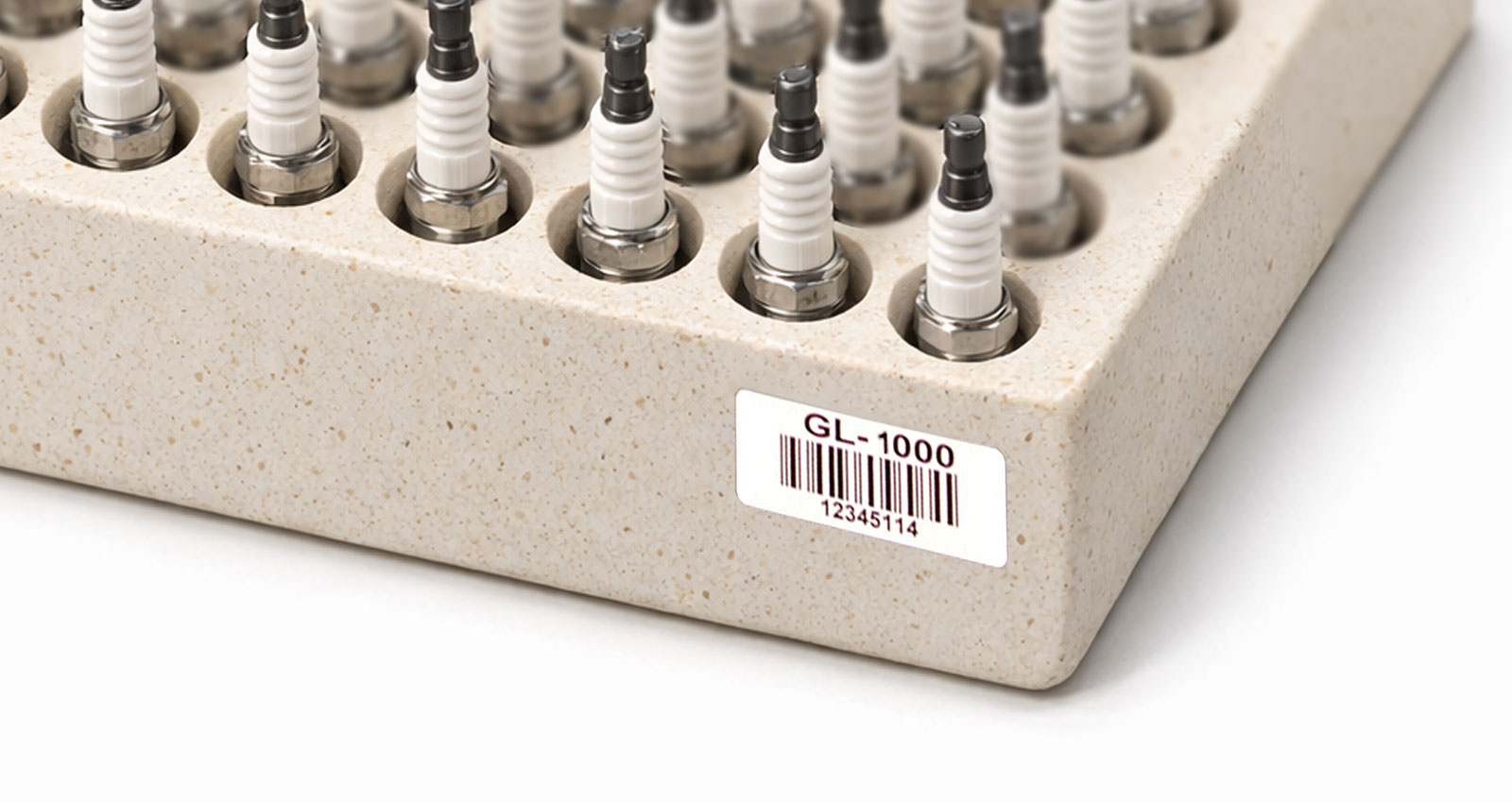
Adhered to the outer surface of ceramic firing containers (“saggers”) used in spark plug firing processes
【Product】
CERALABEL GL
【Challenges】
During the firing process of formed spark plugs, ceramic containers known as saggers are used.
These containers hold multiple products in fixed positions and allow them to pass through the firing furnace together.
Because multiple components are processed simultaneously, lot management at the sagger level is essential.
Since saggers are reused repeatedly, fixture management challenges also arise, including:
・Damage or cracking of saggers over time
・Difficulty tracking the number of usage cycles
However,
establishing traceability at the firing stage was difficult because:
・Very few labels can withstand firing processes exceeding 1,000 °C
・The container shape makes mounting methods such as tag placement,
welding, or screw fixing unsuitable
・Damage or cracking of saggers over time
・Difficulty tracking the number of usage cycles
However,
establishing traceability at the firing stage was difficult because:
・Very few labels can withstand firing processes exceeding 1,000 °C
・The container shape makes mounting methods such as tag placement,
welding, or screw fixing unsuitable
【Solution / Benefits】
During the firing process of formed spark plugs, ceramic containers known as saggers are used.
These containers hold multiple products in fixed positions and allow them to pass through the firing furnace together.
Because multiple components are processed simultaneously, lot management at the sagger level is essential.
Since saggers are reused repeatedly, fixture management challenges also arise, including:
・Damage or cracking of saggers over time
・Difficulty tracking the number of usage cycles
However,
establishing traceability at the firing stage was difficult because:
・Very few labels can withstand firing processes exceeding 1,000 °C
・The container shape makes mounting methods such as tag placement,
welding, or screw fixing unsuitable
・Damage or cracking of saggers over time
・Difficulty tracking the number of usage cycles
However,
establishing traceability at the firing stage was difficult because:
・Very few labels can withstand firing processes exceeding 1,000 °C
・The container shape makes mounting methods such as tag placement,
welding, or screw fixing unsuitable


